


















In a stunning military performance that changed the ancient world forever, Alexander the Great, king of Macedonia, led his army across Asia and defeated the powerful Persian Empire. His victories shocked enemies and impressed allies as he built one of the largest empires in history.
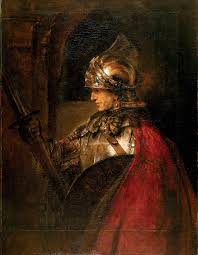
Alexander became king in 336 BCE after the death of his father, King Philip II. Soon after, he set out to conquer Persia, which had once invaded Greece. According to Encyclopaedia Britannica, Alexander wanted revenge for those attacks and hoped to unite Greek cities under his leadership. In 334 BCE, he crossed into Asia Minor with a well-trained army and began his invasion.
Alexander defeated Persian forces in several important battles, including the Battle of the Granicus River and the Battle of Issus in 333 BCE, where the Persian king Darius III fled the battlefield. When Darius later offered peace, one of Alexander’s generals advised accepting it. Alexander refused, famously saying, “I would accept, were I Parmenio.” This quote shows Alexander’s determination to fully defeat Persia rather than settle for compromise.
After securing the eastern Mediterranean, Alexander marched into Egypt, where he was welcomed as a liberator from Persian rule. He founded the city of Alexandria, which later became an important center of culture. In Egypt, Alexander was even recognized as a ruler similar to a pharaoh, gaining him more control over the region.
According to History.com, Alexander’s final and most important victory came at the Battle of Gaugamela in 331 BCE, where he decisively defeated Darius III. After this battle, Alexander captured Babylon and Persepolis, effectively ending Persian power. He ruled over former Persian lands while allowing many local customs to stay, helping maintain order in his vast empire.
Alexander’s conquest of Persia reshaped history and spread Greek culture across Europe, Asia, and Africa. His actions marked the beginning of the Hellenistic Age, a time when different cultures mixed and influenced one another. Even centuries later, Alexander’s bold leadership and ambition continue to make him one of the most famous figures in world history. Sadly, he died June 13, 323 BCE.