
















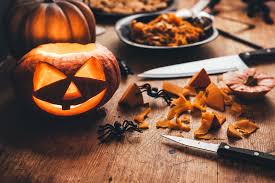
We all love carving pumpkins during the fall season. But ever wondered where this all came from? In the early 1700s, Irish people carved turnips (not pumpkins yet) to ward off the Irish folktale of the evil, stingy, ungenerous Jack. For some background information, stingy Jack messed with the enemy and ended up in a pit of darkness. According to Irishmyths.com, “Jack carves out a turnip and sticks the coal inside, creating a lantern. Hence, “Jack of the Lantern,” which is later shortened to “Jack O’Lantern.” According to history.com, “In fact, the name, jack-o’-lantern, comes from an Irish folktale about a man named Stingy Jack.”
“How did it reach America if Ireland started the tradition?”, you may ask. When Irish immigrants moved to the US because of the Great Famine in 1845, they brought the tradition of carving pumpkins along with them. According to history.com, “Irish immigrants brought the tradition to America, home of the pumpkin, and it became an integral part of Halloween festivities.”
It wasn’t pumpkins that Irish people were carving at first. They carved from vegetables such as turnips, potatoes, and beets. They carved these vegetables at first because they were easily accessible all throughout Ireland, and the practice of carving root vegetables for celebrations such as the Celtic celebration of Samhain was already a tradition. After coming to America, they realized that pumpkins were bigger and therefore easier to carve. They discovered that turnips were not as common in America, but pumpkins, which were native to North America, were plentiful and easier to carve.
You may have experienced and participated in some pumpkin carving fun. Ever wonder who thought of the idea to roast and eat the pumpkin seeds? Surprisingly, it wasn’t the Irish people. It was actually long before pumpkin carving was discovered. In 7000 BC, Native Americans in Mexico valued pumpkins and their seeds for their nutrition, medicine, and as a food source.
In conclusion, Pumpkins have become a symbol for Halloween and fall all around the world thanks to Ireland, its creativity, and its folktales.