

















Did you know that air traffic controllers and pilots work closely together to help planes reach their destinations safely? Most people don’t think about air traffic controllers, but their job is one of the most important in flight. Understanding their role helps explain how flight works as a whole.
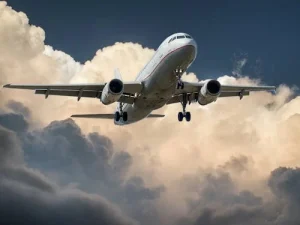
Air traffic controllers are the people who communicate with pilots while a plane is flying. They give instructions about which direction to go, when to climb or descend, and how to stay safely separated from other aircraft. Think of them as the guides who manage the ‘skyroads.’
To perform these duties, controllers rely on specific skills and training. To do this job, controllers don’t need strong math skills. They use multiplication—like figuring out how many feet a plane must climb if it goes up 2,000 feet four times—and division to calculate how far a plane should descend. Becoming an air traffic controller takes years of training.
New controllers first study in Oklahoma City for about a year. After that, they work under the supervision of experienced controllers who watch their decisions and guide them through real-time situations. After several hundred days of practice, if they’re ready and have mastered the correct phrases, they’re cleared to work on their own. If not, their instructor can decide that they aren’t prepared to join the team yet.
Another important skill for controllers is the ability to visualize in 3-D. Not everyone can mentally picture planes moving at different heights and in different directions, and that is a key ability for getting hired. Most shifts are around eight hours long.
Controllers usually work in a small building or tower filled with screens and radios. Some choose to take on longer shifts to earn extra pay. Here is an interview with Erin Roeker, an air traffic controller with 20 years of experience. When asked, what inspired you to become an air traffic controller? She said, “I wanted to find an interesting career that was different every day.”
Another question asked was, “What are your main responsibilities during a shift?” She answered, “Keeping hundreds of aircraft separated and safely to their destination.”
More questions were: “What tools or technology do you use most often? And what happens if there’s miscommunication?” We were answered with “Radar scope, radio frequencies, headset, computer, keyboard, and a VSCS” (equipment used to call other controllers), and “If either of us is unsure about what we said, we’re going to ask a bunch of questions.”
The other questions asked were, “How do you manage multiple aircraft at once?” She said, “Lots of practice and experience.”
What do people misunderstand most about air traffic control? “They mostly misunderstand that there are many different types of air traffic controllers, not just controllers in towers at airports.”
What’s the scariest experience you had as an air traffic controller? “I’ve been at work when planes have crashed.”
In conclusion, air traffic controllers are an important part of flying. They aren’t just people sitting in airport towers—they guide pilots, keep planes and people safe, and help every flight reach its destination.